Abstract
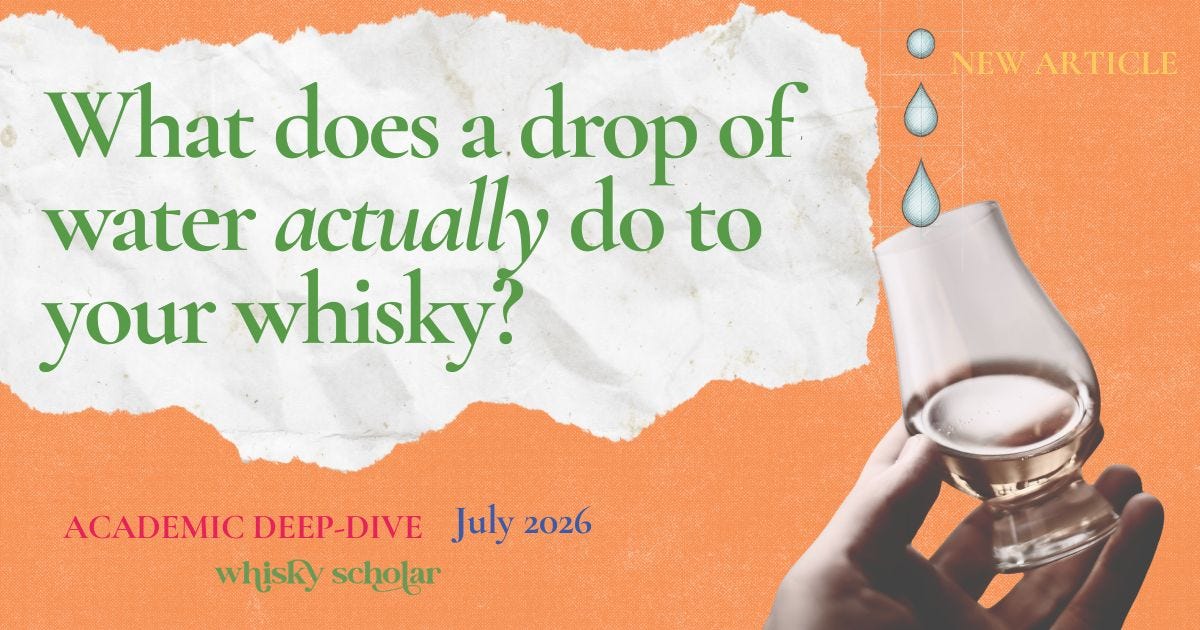
Whisky meets water at every stage of its life. It comes off the still strong, is reduced before it goes into the cask, reduced again before it goes into the bottle, and then, at the table, the drinker often reaches for a pipette and adds a few drops more. “Add a little water to open it up” is one of the most repeated pieces of advice in whisky; yet, almost nobody can say why it works.
When chemists modelled what actually happens to a single flavour molecule in a glass of whisky, the answer wasn’t what the folklore may have assumed; water doesn’t “lift” the aroma out of the spirit. Rather, it rearranges where the flavour sits, pushing certain compounds to the surface where they can escape into the air you smell. A separate study, pairing a trained tasting panel with gas chromatography, found the same effect and something else besides: They found a point past which the water stops helping and starts flattening the dram.
This piece follows the drop of water down to the molecule. It explains what the alcohol is doing to the flavour while it’s still in the glass, why a smoky compound called guaiacol behaves the way it does, how dilution reshapes the rest of the aroma rather than simply weakening it, and where the evidence says the balance tips from opening the whisky up to washing it out.